
← All eight fields

Enabling Technology & Automation

Accelerating50%

This field leaves the experiments themselves to robots and AI, and raises the speed of research and development from the root. Like AI drug discovery, it does not itself become a treatment, but it is an important foundation that accelerates all other medical and longevity research.

A robot arm lining up test tubes in a laboratory, with a computer recording results

1. What is this field?

New-drug development and cell rejuvenation alike move forward by repeating experiments thousands and tens of thousands of times in the laboratory. Work is progressing to replace this trial and error, done by human hands, with robots and AI that keep it turning fast, 24 hours a day without rest.

Self-driving laboratories (AI × robots): a robot mixes chemicals and measures the reactions; AI analyzes the results, decides which condition to try next, and immediately instructs the next experiment. Even without human intervention, experiments and improvements keep turning automatically, 24 hours a day.

Mass parallel experiments (high-throughput exploration): patterns so vast they would take human hands weeks are tested by machine all at once, and promising candidates are narrowed down in a short time.

Cloud laboratories: a system for sending instructions over the internet to automated experiment facilities in distant places, and having sophisticated experiments carried out automatically while sitting at one's own desk.

2. Where the research stands

Readiness score: 50 / 100 (0 = still at the idea stage, 100 = a stage where anyone can receive the treatment)

50%

+ Frontline

A robot researcher that works without rest: the University of Liverpool's mobile robot carried out 688 chemistry experiments on its own over 8 days without rest, and discovered a catalyst combination with six times the performance of the conventional one (published in Nature in 2020).

Automatic improvement of proteins: in 2024, AI and robots automatically repeated the cycle of design, experiment, and learning, and succeeded in improving the working of an enzyme without human hands.

Planning and executing experiments with language AI: a demonstration also succeeded in which a large language model (LLM) such as ChatGPT drew up an experimental plan itself, instructed a robot, and carried a chemical synthesis through (published in Nature in 2023).

− Remaining challenges

Setting the questions is still human work: every result so far has been achieved inside rules that people decided in advance. The field has not yet reached the territory of forming hypotheses about what should be investigated in the first place, or working out the root causes of failures.

The risk of AI "misreading": the self-driving laboratory A-Lab announced that it had synthesized new materials without human instruction, but other researchers later pointed out that the materials could not really be called new, and in January 2026 the paper was corrected. Even if experiments can be run at high speed, misreading the results risks mass-producing "wrong discoveries."

Introduction costs and scattered standards: installing the equipment costs enormous sums, and systems differ from equipment maker to equipment maker and laboratory to laboratory; shared standards are not yet in place.

This field raises the experimental speed of all seven other fields. The faster experiments turn over, the sooner candidates for drugs that slow aging and methods that regenerate tissue are found, and the closer longevity escape velocity (LEV) — the state in which life expectancy grows faster than aging itself — comes. This site projects that point could be reached as early as 2061.

3. The researcher

Here is one researcher who put this field's goal into words early on.

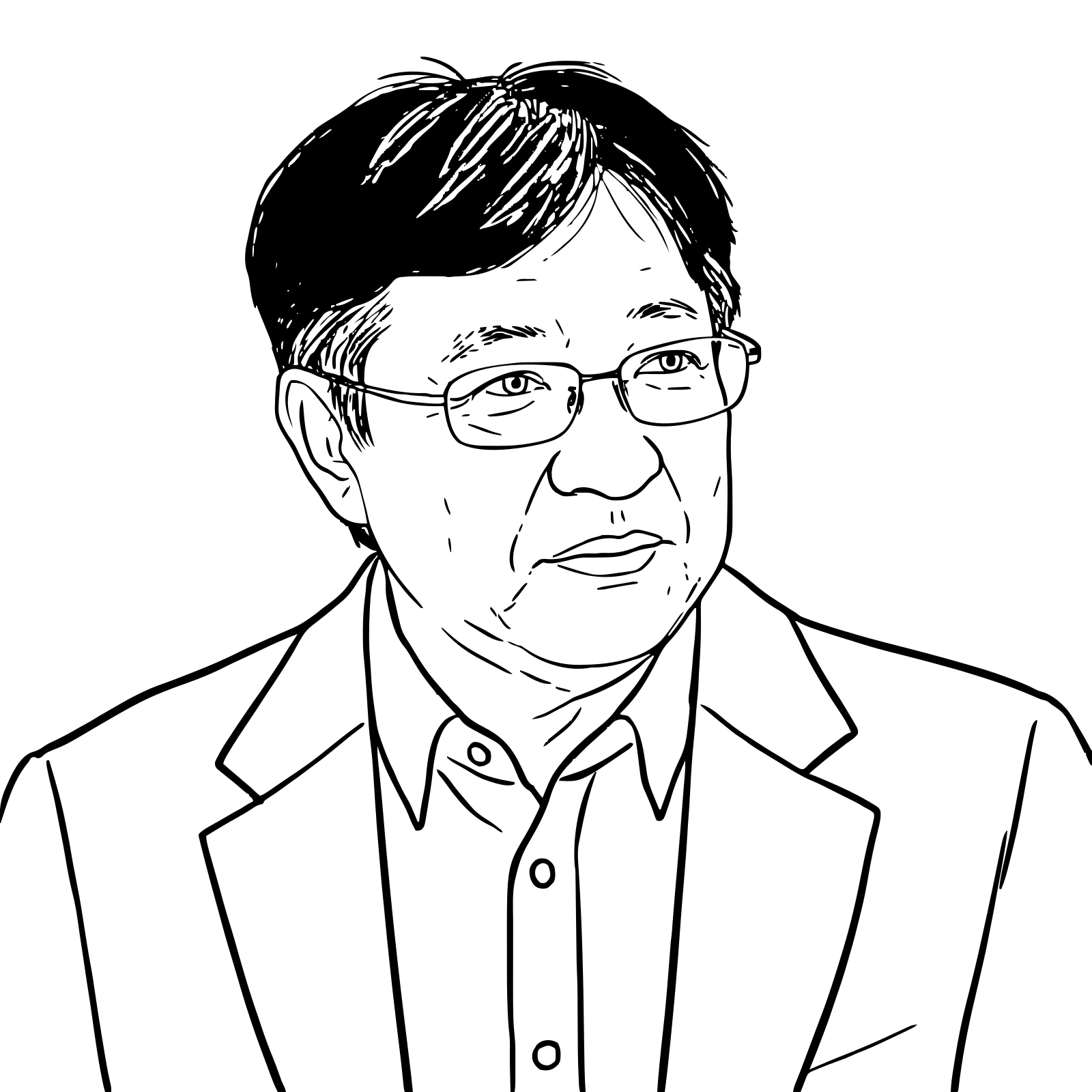
Illustration of Hiroaki Kitano

Hiroaki Kitano

President and CEO, Sony Computer Science Laboratories (Sony CSL) / Professor, Okinawa Institute of Science and Technology Graduate University (OIST)

Kitano is the researcher who put forward, ahead of the world, the vision of making AI itself achieve great scientific discoveries. After serving as Chief Technology Officer (CTO) of Sony Group, he now also serves as its Chief Technology Fellow. He is a pioneer of systems biology, which grasps life as a single system, and is also known as a founder of RoboCup, the world championship of robot soccer.

In 2016 he proposed an international goal — the Nobel Turing Challenge: by 2050, to create "AI scientists" that autonomously achieve Nobel Prize-level discoveries. The current boom in laboratory automation is precisely the first step toward that grand goal.

4. Related news

No related news for this field yet.

For informational purposes only. Not medical advice.